


Together we're making the Passage more accessible.
Join Trevor Kilkenny on his voyage.
Accessibility and Inclusion: Trevor Kilkenny’s Mission
Meet Trevor Kilkenny, our Treasurer and Accessibility and Inclusion Officer at the Pumicestone Passage Pirates. Trevor’s journey is one of resilience, determination, and giving back. As a quadriplegic, he has faced his own struggles with mental health but has emerged stronger, driven by a passion to create a more accessible and inclusive community for all abilities.
Trevor believes the Pumicestone Passage region should be a place where everyone, regardless of physical limitations, can enjoy its beauty and opportunities. Whether it’s fishing, boating, camping, or simply exploring the waterways, Trevor is committed to breaking down barriers and ensuring no one is left behind.
His mission goes beyond advocacy—he’s working hands-on to make real changes, from improving facilities to creating events tailored to people of all abilities. Trevor’s story inspires us all to see challenges as opportunities and to work together for a more inclusive future.
If you share Trevor’s vision or have a similar ability level, we invite you to join him on this quest. Together, we can make the Pumicestone Passage a region where everyone feels welcome, connected, and empowered. Let’s sail forward toward a future of inclusion, one step—or wheel—at a time.


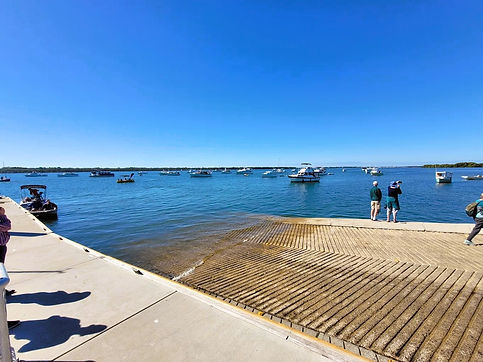
ACCESSIBILITY & INCLUSION
The Water Belongs to Everyone
The Pumicestone Passage is more than coastline.
It is restoration.
It is rehabilitation.
It is belonging.
Stretching between the Sunshine Coast and Moreton Bay, opening toward Tangalooma and the Coral Sea, this waterway holds physical, psychological and social value for thousands of Australians.
It is public.
Which means it must be accessible.
Pirates Inc is committed to strengthening accessibility and inclusion across every boat ramp of the Passage so that no one is excluded from its restorative power.

Accessibility Is Preventative Infrastructure
Improving marine access is not recreational enhancement.
It is protective design.
The World Health Organization recognises that:
“Supportive community environments and social participation are protective factors for mental health.”
(World Health Organization, World Mental Health Report, 2022)
The Australian Institute of Health and Welfare reports that:
“Social isolation and limited social support are associated with increased psychological distress and suicidal behaviour.”
(AIHW, Australia’s Health 2022)
When infrastructure excludes people with disability, mobility limitations, sensory differences, or service-related injuries, it increases isolation.
When infrastructure includes them, it strengthens protective factors.
Accessibility is not compliance.
It is prevention.
Water as Therapy: The Evidence
Aquatic environments provide measurable physical and psychological benefit.
Harvard Medical School notes:
“Immersion in water reduces stress hormones and promotes relaxation through parasympathetic nervous system activation.”
(Harvard Health Publishing, 2020)
A systematic review published in BMJ Open found that aquatic therapy significantly improves physical function and psychological wellbeing in individuals with chronic conditions and disability (Barker et al., 2014).
Research in The Lancet Planetary Health concluded:
“Exposure to blue spaces such as oceans, lakes and rivers is associated with improved mental health and reduced psychological distress.”
(Gascon et al., 2017; Bratman et al., 2019 synthesis)
The UK Government’s BlueHealth Project (EU Horizon 2020 funded) found consistent evidence that proximity to water environments improves wellbeing, social connection, and life satisfaction.
Spending time near water is not symbolic.
It is neurological.
It lowers stress markers.
It improves mood regulation.
It strengthens social connection.
It reduces symptoms of anxiety and depression.
For veterans and trauma survivors, outdoor water-based activity has demonstrated additional benefits in reintegration and recovery (Australian Department of Veterans’ Affairs, Mental Health Strategy 2020–2025).
If we know water heals, then restricting access restricts healing.


Current Accessibility Gaps
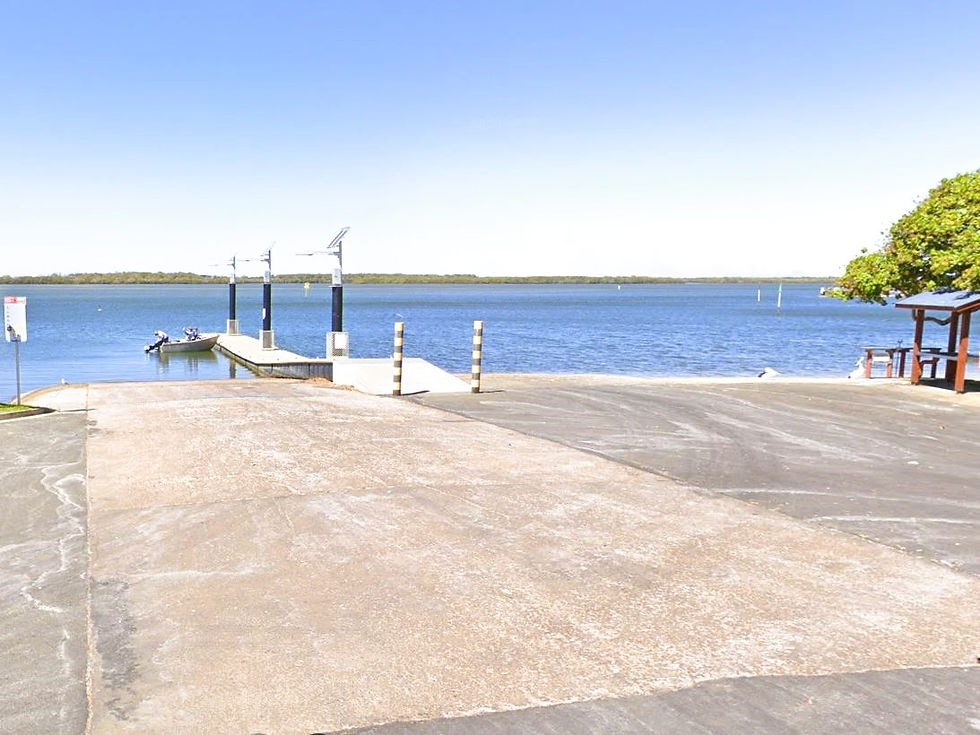
Our ongoing audit of ramps across the Pumicestone Passage has identified:
• Sand accumulation at Diamond Head (Bells Creek) limiting adaptive vessel launch
• Sand build-up at Military Jetty restricting accessibility boats
• No accessibility pontoon at Coochin Creek
• No accessibility pontoon at Donnybrook
Partial access is not full inclusion.
True accessibility requires safe transfer, stable pontoons, and design that accommodates mobility and sensory needs.

Inclusion as Suicide Prevention
#piratesofftheplank
Making the invisible VISIBLE

The plank symbolises the edge — the moment someone feels disconnected, unseen, or excluded.
Infrastructure can either push people toward isolation — or pull them back toward belonging.
The Australian Government’s National Suicide Prevention Strategy 2022–2032 emphasises:
“Creating connected communities and strengthening protective factors reduces suicide risk.”

Belonging is a protective factor.
Access to restorative environments is a protective factor.
Social participation is a protective factor.
When accessible ramps allow a wheelchair user to fish with mates, that is prevention.
When a veteran with limited mobility launches safely and reconnects with community, that is prevention.

When families of all abilities share time on the water, that is prevention.
When families of all abilities share time on the water, that is prevention.
Removing physical barriers removes psychological planks.
Accessibility is the structural expression of #PiratesOffThePlank.
We do not only speak about suicide prevention.
We build environments that strengthen protection.
Our Commitment
Pirates Inc is working to:
• Increase compliant accessibility pontoons across the Passage
• Advocate inclusive design standards in all future upgrades
• Address sand management limiting adaptive vessel access
• Partner with councils, marine engineers and contractors
• Secure government grants aligned with public health objectives
• Position the Passage as a national model for inclusive marine access
We approach this collaboratively.
Constructively.
Professionally.
The goal is not criticism.
The goal is infrastructure that protects dignity and wellbeing.
Why This Matters Now
As populations age and rates of mobility impairment increase, inclusive marine infrastructure becomes essential.
The World Health Organization estimates that:
“More than 1 billion people globally live with some form of disability.”
(WHO, World Report on Disability)
Inclusive design is no longer niche policy.
It is mainstream public responsibility.
The Passage can lead.
Join the Work
If you are:
• A marine contractor
• An accessibility specialist
• A grant writer
• A business seeking meaningful partnership
• An elected representative committed to inclusion
We invite collaboration.
The water restores people.
Access restores dignity.
Belonging restores hope.
And hope keeps people off the plank.
References
World Health Organization (2022). World Mental Health Report
Australian Institute of Health and Welfare (2022). Australia’s Health
Gascon et al. (2017). Blue space exposure and mental health outcomes, The Lancet Planetary Health
Bratman et al. (2019). Nature exposure and mental health synthesis
Harvard Health Publishing (2020). Stress and water immersion
Barker et al. (2014). Aquatic therapy review, BMJ Open
Australian Government (2022). National Suicide Prevention Strategy
WHO (2011). World Report on Disability
WEBSITE SAFETY & CRISIS SUPPORT DISCLAIMER
Mental Health & Crisis Support Notice
Pumicestone Passage Pirates Inc. (“PPP”, “Pirates Inc.”, “Triple P”) is a community organisation focused on social connection, inclusion, recreational activities, and community engagement.
PPP is not a crisis service, mental health service, counselling service, medical provider, psychology practice, psychiatric service, or emergency support provider.
Our volunteers, members, ambassadors, moderators, administrators, and representatives are not acting as licensed medical, psychological, psychiatric, counselling, or crisis-intervention professionals unless expressly stated otherwise in writing.
Information, conversations, social media interactions, community discussions, events, peer support, or activities conducted through PPP must not be relied upon as a substitute for professional medical advice, diagnosis, treatment, mental health care, crisis intervention, or emergency assistance.
If you, or someone you know, are experiencing distress, suicidal thoughts, self-harm ideation, mental health crisis, or are in immediate danger, you must immediately contact:
-
Emergency Services: 000
-
Suicide Call Back Service: 1300 659 467
-
Mental Health Access Line Queensland: 1300 MH CALL (1300 64 22 55)
-
Your treating doctor, psychologist, psychiatrist, or local hospital emergency department
PPP reserves the right to contact emergency services, crisis services, authorities, or appropriate support agencies where there are reasonable concerns regarding the immediate safety or welfare of any individual.
By using this website, participating in PPP activities, engaging with PPP social media platforms, or communicating with PPP representatives, you acknowledge and agree that:
-
PPP does not provide clinical or emergency mental health services;
-
participation in PPP activities does not establish a therapeutic, counselling, fiduciary, clinical, or duty-of-care relationship beyond obligations imposed by Australian law;
-
individuals remain responsible for seeking appropriate professional support for their personal circumstances;
-
PPP is not liable for decisions made by individuals based on community interactions, peer discussions, or informal support provided through the organisation;
-
any peer support offered within the community is informal, voluntary, non-clinical, and not professional treatment.
If this is an emergency or there is immediate risk to life or safety, call 000 immediately.